CultureSkanderbeg Square
Skanderbeg Square: The Heartbeat of Tirana’s Past and Present
E
Erblin Vukaj
March 29, 2026 · 5 views
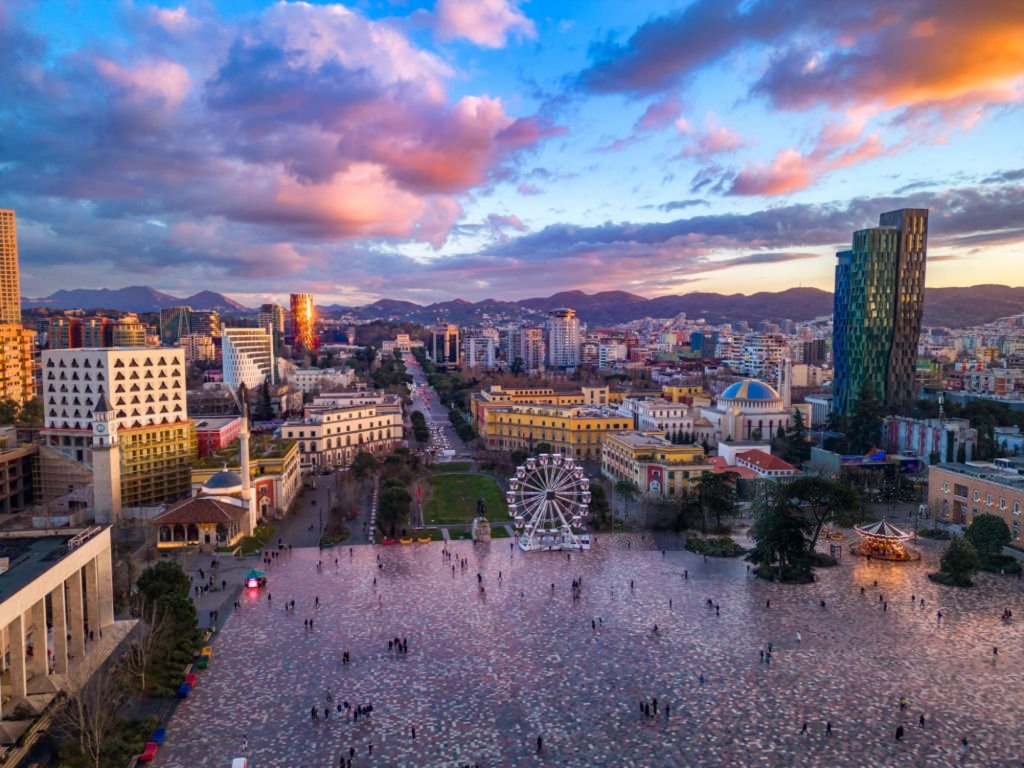
Skanderbeg Square, Tirana’s iconic central plaza, stands as a living testament to Albania’s rich history and dynamic transformation.
Officially named on November 26, 1937, the square was originally designed as a graceful circle, featuring a central fountain and surrounded by landmark buildings such as the Old Bazaar, the Clock Tower, Et’hem Bey Mosque, and the Church of the Annunciation (the latter was later demolished). The square’s architectural ensemble once radiated the spirit and traditions of the city.
During the socialist era, Skanderbeg Square underwent dramatic changes. Stalin’s statue presided over the plaza from November 4, 1951, until 1968, when it was replaced with the impressive monument to Gjergj Kastrioti Skanderbeg, Albania’s national hero. This historic monument, crafted by renowned sculptors Odhise Paskali, Janaq Paço, and Shaban Hadëri, was inaugurated on January 11, 1968, marking 500 years since Skanderbeg’s passing.
The square’s revival began in 2008, with the Tirana Municipality launching an international competition that was eventually won by Belgian studio 51N4E. Their vision transformed in 2016 Skanderbeg Square into a vibrant, pedestrian-only zone, paved with stones sourced from every Albanian region—creating a symbolic “carpet” of national unity.
Rainwater flows gently across its surface on sunny days, while lush trees and plants representing Albania’s diverse landscapes breathe life into the space. Today, Skanderbeg Square is not just the geographical center of Tirana; it is the city’s social, cultural, and architectural soul, where history and modernity meet and visitors can experience the pulse of Albania in every step.
Tags:
Skanderbeg Square